Showing posts with label Nathan Phillips. Show all posts

Tuesday, January 29, 2019

Context Meditation / Indigenous Vitality

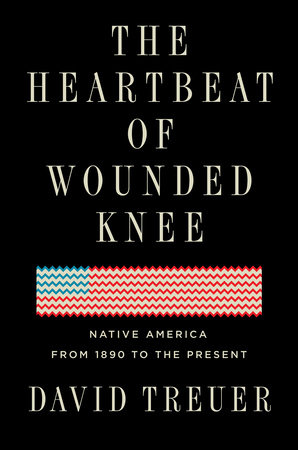
The Heartbeat of Wounded Knee by David Treuer

“An ambitious, gripping, and elegantly written synthesis that is much more than the sum of its excellent parts—which include a rich array of Native lives, Treuer’s own family and tribe among them–The Heartbeat of Wounded Knee brings a recognition of indigenous vitality and futurity to a century of modern Indian history.” 
— Philip J. Deloria, Professor of History, Harvard University 


Above is the Covington Catholic High School Mascot, The Colonel.  As far as I can tell, this mascot gets its name from Leonard Covington who served as a Captain in the Northwest Indian War (1785-1795) and later became a Colonel.  He was a United States Army Brigadier General and a member of the United States House of Representatives. I'm struck by the resemblance to one of the students of Covington Catholic High School:


A few days ago, I listened to Nicholas Sandmann speaking on the Today Show.  He did not look like the same young man the whole world saw in the photo above.  To me, he looked drugged as he stared fixedly and spoke in a monotone voice.  Although he relaxed somewhat as the interview progressed, he appeared to me to be someone in profound shock.

The closest he came to an apology was when he said, "...  I respect him.  I'd like to talk to him.  I mean, in hindsight, I wish we would have walked away and avoided the whole thing ..."

My dream remains that a conversation will take place between Nathan Phillips and Nicholas Sandmann.  If anyone could help Nicholas Sandmann open his heart, it would be Nathan Phillips.

My perception remains that Nathan Phillips lives by principle and has much to teach all who care to listen.  I keep wondering if Pope Francis will have anything to say to Nicholas Sandmann.  Who knows what the long-term results will be of the unexpected meeting of Nathan Phillips and Nicholas Sandmann on January 18, 2019?

"Actions often ripple far beyond the immediate objective and remembering this is a reason to live by principle and act in the hope that what you do matters, even when results are unlikely to be immediate or obvious."  
-- Rebecca Solnit, from the essay, "In Praise of Indirect Consequences," from Call Them by Their True Names, page 173)

When our local library buys a copy of David Treuer's book, I hope to be first in line to read it and learn more about the historical context in which Nathan Phillips and Nicholas Sandmann looked into each other's eyes in a historical moment.


"Until the US accounts for its history at every level of society, this scenario will play out relentlessly, in endless configurations."

Sunday, January 27, 2019

An American Family Meditation / Expanding the Context / Against All Odds


More that has been brought to my attention from a friend who is on Facebook:

https://www.facebook.com/DigitalSmokeSignals/videos/interview-with-nathan-phillips-and-alethea-phillips-from-the-native-youth-allian/10157119901129746/

Below are Shoshana and Nathan Phillips.  Shoshana died of cancer in 2014.


Below are Nathan Phillips and his daughter, Alethea.  Nathan and Shoshana also have a son named Zakiah.


May something good come of the events of January 18, 2019, in Washington, D.C., during the Indigenous Peoples March.  My hope is that Nicholas Sandmann will someday meet Nathan Phillips in an expanded context and understand what Nicholas couldn't possibly have understood on January 18 -- that Nathan Phillips is a man of peace who is willing to forgive, as Nicholas Sandmann's teacher, Jesus, did.  May common ground be found.

Friday, January 25, 2019

Indigenous Peoples March Meditation


Thank you to Sabine for the link to the Democracy Now! interviews with Nathan Phillips, Chase Iron Eyes, and David Treuer.

An hour in three parts, days, weeks, months, years, decades, centuries of history.

Thursday, January 24, 2019

Nathan Phillips Meditation

(screen shot from AJ+ video on Facebook)

It has occurred to me that if Rosa Parks had taken a seat in the front of a bus during an administration like our current political administration, she could well have experienced what Nathan Phillips experienced and been discounted in the way Nathan Phillips has been by our current president and that dwindling portion of American citizens that stand with him.

Below is what I transcribed from captions of the video by AJ+, "Nathan Phillips on Racism," that was posted on January 23, 2019, and seems to only be available for viewing on Facebook.  I am not on Facebook but am grateful that this video was brought to my attention.  I hope that you can view the video and witness the integrity with which Nathan Phillips speaks.  I have watched the complete YouTube video footage that gives the context in which Nathan Phillips stepped forward, and I continue to respect him and meditate on what occurred. 


Nathan Phillips:  This is America. The dream of freedom, of pursuit of happiness, hurts me. The history we have as America, the genocide against the Indigenous people, the enslavement of the Black people.

AJ+ Narrator:  Nathan Phillips has been fighting for the rights of Indigenous people for decades.  The 64-year-old attended the Indigenous People's March, thinking he would highlight injustices that Indigenous people face. Instead, he was in the media spotlight for intervening in a standoff between anti-abortion students and Hebrew Israelite activists and for Nathan, the experience has left him scarred for life.

Nathan Phillips:  That was what I was seeing.  I was seeing this clear as black and white ... racism, bigotry, hatred etched in my mind.

AJ+ Narrator:  The Indigenous war vet (am's note:  This is a misunderstanding that has been cleared up.  Nathan Phillips is a Vietnam-era veteran, not a war vet) has witnessed injustices against his people for decades.  

Nathan Phillips:  I was taken away from my family and put in a foster home.  It was a time, in this country, they called assimilation.  It was a period of time that they, America, [in] terms of their Indian policy -- Indian problem.  During that time of assimilation, they took away hundreds of thousands of children away from their parents, separated us, put us in foster cares, put us in boarding schools.  A lot of those children that were taken away, never got home.

AJ+ Narrator:  Indigenous people are more likely to be killed in police encounters, 83% of Indigenous women have experienced violence in their lifetime and most perpetrators are non-Indigenous.  So what happened at the recent march is nothing new to Nathan.

Nathan Phillips:  I seen that, so I got scared.  Not so much for myself but for my future generations yet to come.  What kind of country are we going to leave that next generation? Just talking about Indigenous youth or Black or all our next generation.  Indigenous people don't believe we have time to be squabbling and bickering over race, religion.

AJ+ Narrator:  But he thinks things are only getting worse for Indigenous people.

Nathan Phillips:  We're seeing it daily in the news.  We're seeing this rhetoric that's being spilled by our leaders. Our lawmakers are saying horrible things.  As they were ripping at each other, it was ripping at my heart.  My country here in my land, my home, my America.

AJ+ Narrator:  Despite the standoff, Nathan still has hope.

Nathan Phillips:  I see a better future. I do see a better future here.  Not only here in America, but throughout the world.  There are a lot of people who are just realizing that if we don't do something now, it's going to be too late. I guess what I say to a lot of people: peace and love.  Put that in your heart and love for all humans.

Monday, January 21, 2019

Early Morning Meditation on Martin Luther King Day 2019: Nathan Phillips And The Significance Of His Drumming


Martin Luther King, Jr.:

“Our nation was born in genocide when it embraced the doctrine that the original American, the Indian, was an inferior race. Even before there were large numbers of Negroes on our shores, the scar of racial hatred had already disfigured colonial society. From the sixteenth century forward, blood flowed in battles of racial supremacy. We are perhaps the only nation which tried as a matter of national policy to wipe out its Indigenous population. Moreover, we elevated that tragic experience into a noble crusade. Indeed, even today we have not permitted ourselves to reject or feel remorse for this shameful episode. Our literature, our films, our drama, our folklore all exalt it.” 

Listen

Living close to the Lummi Nation, I have been fortunate to be able to attend numerous events in which I was moved by the presence of Lummi drummers, including at Martin Luther King Day celebrations.  Although it was clear to me and to anyone familiar with Native drumming, that Nathan Phillips was attempting to stop a charged situation from escalating by stepping in, playing his drum and chanting a healing prayer, that action was not understood by the crowd of Roman Catholic young men and perceived as an act of aggression to which they responded with edgy laughter, defensive body language and blatant disrespect toward a representative of the people who suffered so deeply historically in the Roman Catholic mission schools.  

To add to the complexity of the situation, Deb Haaland is Roman Catholic in the best sense of the word:

"This Veteran put his life on the line for our country," Haaland, one of the first two Native American women elected to Congress, wrote on Twitter.  "The students' display of blatant hate, disrespect, and intolerance is a signal of how common decency has decayed under this administration.  Heartbreaking."

May this Martin Luther King Day shed light on these words:

"Revolution is never easy.  It is hard and messy and painful."
(Nylah Burton)

"I believe that unarmed truth and unconditional love will have the final work in reality.  This is why right, temporarily defeated, is stronger than evil triumphant."
(Martin Luther King, Jr., from Nobel Peace Prize acceptance speech, Olso, Norway, 1964)


Sunday, January 20, 2019

Nathan Phillips (transcribed by am) / From the perspective of Indian Country


(screen shot of Nathan Phillips from CNN YouTube channel newscast published January 19, 2019)

CNN: We are hearing from a Native American Elder, a Vietnam War veteran, speaking to CNN after a disturbing viral video shows a group of teens harassing and mocking him in the nation's capitol. Here is the video sparking outrage on social media right now.  Nathan Phillips was beating his drum and singing an American Indian protest song and this was on Friday on the steps of the Lincoln Memorial, when he saw a clash erupting between a group of teenage students and four African American young men preaching about the Bible and oppression. Well, Phillips says he immediately sensed danger.

Nathan Phillips: When I was there, and I was standing there and I seen that group of people in front of me and I seen the angry faces and all of that, I realized I had put myself in a really dangerous situation. You know, it was like here was a group of people who were angry at somebody else, and I put myself in front of that and all of a sudden, I am the one who all that anger and all that wanting to have the freedom to just rip me apart, you know, that was scary. And I'm a Vietnam-times veteran and I know that mentality of “there's enough of us, we can do this.”

CNN: Then Phillips describes the tense moments now being replayed over and over again online, when a young man got right in his face.

Nathan Phillips: When I started going forward and that mass of groups of people started separating and separating and moving aside to allow me to move out of the way to proceed, this young feller put himself in front of me and wouldn't move and so if I took another step, I would be putting my person into his presence, into his space, and I would have touched him, and that would have been the thing that the group of people would have needed to spring on me.

CNN: CNN's Sara Sidner asked Phillips what bothered him the most about Friday's confrontation. Here are his thoughts.

Nathan Phillips:  Fear. (am's note: there is a pause here before he continues).  Not for myself but fear for the next generation, fear where this country's going, fear for those youths, fear for their future, their souls, their spirits, what they're going to do to this country. What they were doing was not making America great, it was just tearing down the fabric. The whole idea, the spirit of America, that wasn't it, you know.

*

From the perspective of Indian Country:

Trying to see this situation in its immediate context -- not ignoring the historical context in all its complexity

Hearing Nathan Phillips


From Indian Country Today


More from Indian Country Today:

Nathan Phillips of the Omaha Tribe of Nebraska & Iowa

Indigenous Peoples March