Showing posts with label Rebecca Solnit. Show all posts

Thursday, March 21, 2024

Walking / O California (the landscape of my younger days)


"Walking, ideally, is a state in which the mind, the body, and the world are aligned, as though they were three characters finally in conversation together, three notes suddenly making a chord. Walking allows us to be in our bodies and in the world without being made busy by them. It leaves us free to think without being wholly lost in our thoughts. I wasn’t sure whether I was too soon or too late for the purple lupine which can be so spectacular in these headlands, but milkmaids were growing on the shady side of the road on the way to the trail, and they recalled the hillsides of my childhood that first bloomed every year with an extravagance of these white flowers. Black butterflies fluttered around me, tossed along by wind and wings, and they called up another era of my past. Moving on foot seems to make it easier to move in time; the mind wanders from plans to recollections to observations."


*


*

I'm grateful to have been born into and grown up experiencing the landscape of California.  It brought a joy that is still with me all these years since I left, never imagining that I would spend the rest of my life living a thousand miles to the north in Western Washington which has its own beauty but is not my first love.  Eastern Washington does look much the way coastal California did when I was young but only for part of the year, and the Cascade Mountains separate Western and Eastern Washington. Eastern Washington has snow in the winter and extreme heat in the summer, unlike the coastal region of Northern California where I grew up, never far from the Pacific Ocean.  I continue have dreams where I rejoice that I am living near the Pacific Ocean.

Wednesday, July 6, 2022

Home / The beauty and the terrible realities we face / Finding balance


Krista Tippett:
I usually start my conversations with an inquiry about the spiritual background of your childhood. And however you would define that. And, as I look at the sweep of your writing, I see so many elements that to me are profoundly spiritual, a long sense of time or a robust commitment to hope. You describe your childhood in so many ways, and in one place — these are words you use, “A scrawny, battered little kid in a violent house.” And I wonder how you would think about that notion of the spiritual background of your childhood. And it occurs to me that perhaps some of these things were seeded by absence, as much as by presence.

Rebecca Solnit:

I think that’s true. And when you asked that question, what comes to mind is kind of a map of where most of my childhood took place. I wrote somewhere that I had an inside-out childhood, because every place was safe but home. If you went just on the other side of the backyard fence was a quarter horse stud farm and then dairy farms and open space. And the landscape and the animals, domestic and wild, were this huge refuge, and really fed encouraged me, and there was a sense of community with the non-human. And so that was if you went north, even just to the other side of the fence and beyond, just endless open space, and oak trees, and grasslands, and wildlife.

And then if you went south, there was a really great public library. And the minute I learned how to read, it was as though I’d been given this huge treasure. Every book was a box I suddenly knew how to open, and in it, I could meet people, go to other worlds, go deep in all kinds of ways. And I spent my childhood in the hills and in the books. So that was not maybe what people think of conventionally as spirituality, but that was my company, my encouragement, my teaching, my community.

*

Rebecca Solnit:
I want better metaphors. I want better stories. I want more openness. I want better questions. All these things feel like they give us tools that are a little more commensurate with the amazing possibilities and the terrible realities that we face.

*

Rebecca Solnit grew up in much the way I did, walking in the hills of Northern California, reading books.  Northern California is her home and one of the two places I can call home.  Her writing continues to inspire me.

*

My friend, Yom, came alone from Vietnam after the fall of Saigon in 1975.  Along with other refugee women, she was given a job doing industrial sewing for Columbia Sportswear at the place where I was working as a sewing machine operator.  We were both in our mid-20s.  We have been friends for nearly 50 years.  For many years, Yom saved her money and bought a home for herself in Seattle and began to create a garden.  Yom married Chris.  Yom and Chris adopted a baby boy from an orphanage in Vietnam nearly 20 years ago.  He just finished his first year of college.  Chris made this video of Yom's beloved garden.  


Sunday, July 3, 2022

Meditation: Imagining Interdependence Day


Gwendolyn Zoharah Simmons -- b. 1944

Krista Tippett -- b. 1960

Rev. Lucas Johnson --  b. Late 1970s or early 1980s

This conversation from 2014 (including transcript) with its talk of community and coalitions and change and not giving up, generation after generation, against all odds, has lifted my spirits today.   

Nothing has given me a better perspective on the current state of the world than listening to all the conversations from the On Being Project under the heading of Across Generations.  

*

All the goodness and the heroisms will rise up again, then be cut down again and rise up. It isn’t that the evil thing wins — it never will — but that it doesn’t die. 
(John Steinbeck)

*

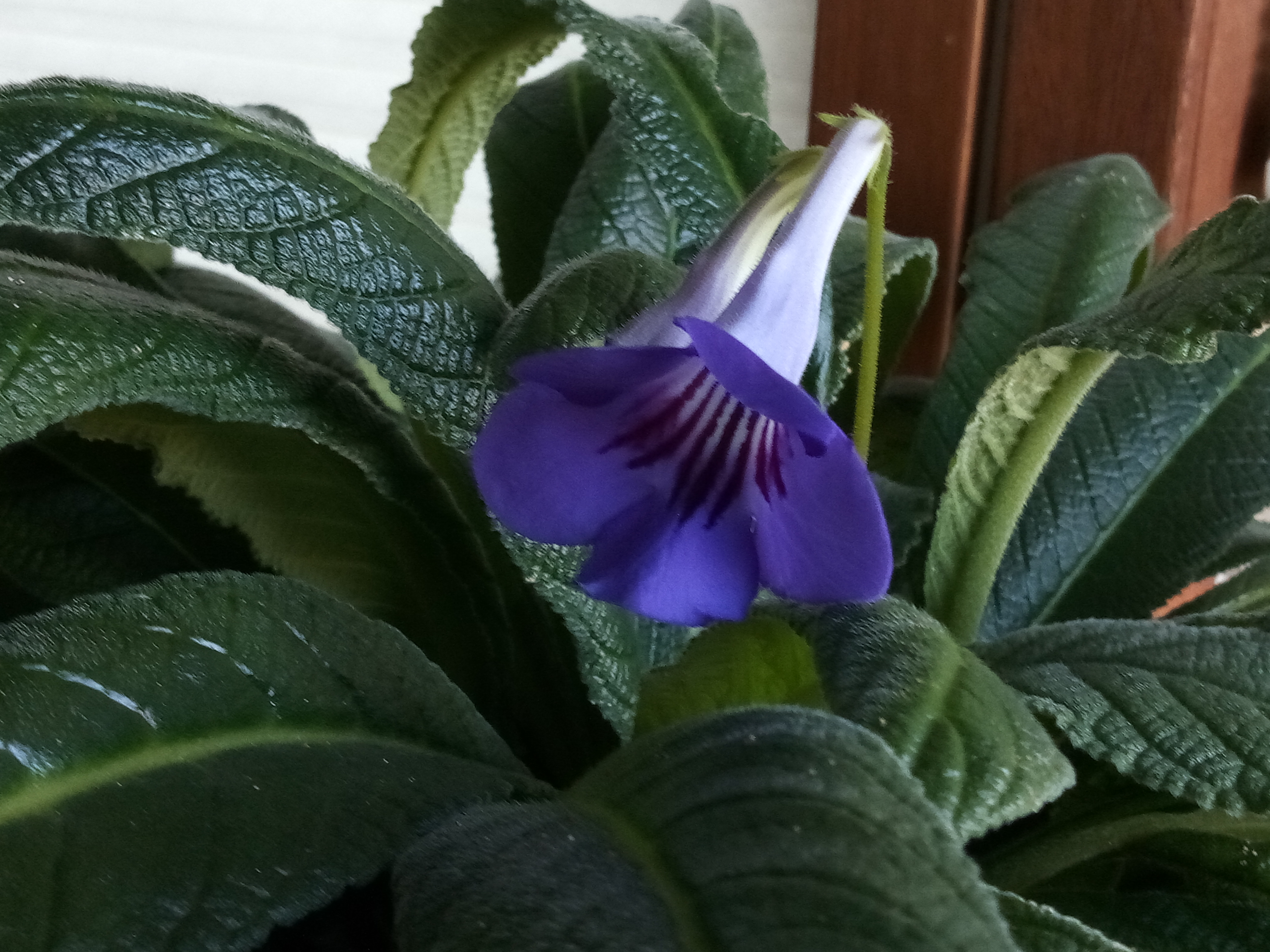
First Streptocarpus bloom yesterday, coinciding with a day that I will always remember when I was at the ocean with R.  It was 1968, another turbulent year in the history of the world.  We were 18 years old and in love.  


*

1968


*

Revisited in 2022

"... So let us not talk falsely now / the hour is gettin' late ..."

*

"Sometimes when you are devastated you want not a reprieve but a mirror of your condition or a reminder that you are not alone in it.  Other times it is not the propaganda or the political art that helps you face a crisis but whatever gives you respite from it."


Thanks to Beth from Alive On All Channels for these words from Rebecca Solnit.

Wednesday, June 22, 2022

Extended Meditation on Fathers and Missing Fathers and The Orchardist, by Amanda Coplin / Update with additional relevant photos added / And now an update when a relevant quote appeared


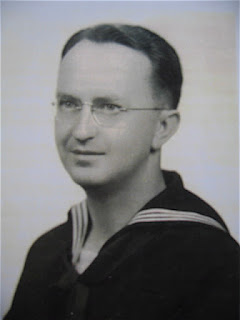
1.  My father during World War II.  There was something about my father that was missing, although he was present.

2.  My father's father in the early 1900s.  First child in the family to be born in the United States, his two older brothers having been born in Norway.  Two of his younger siblings died during a smallpox epidemic when my grandfather was a young boy.  The family had a farm on what had recently been Dakota land in Western Minnesota.

3.   My father's mother's father and grandfather (first on the left in the top row and on the far right).  My great grandfather was born in the United States.  My great great grandfather was born in Norway.  They had a farm on what had recently been Dakota land south and east of Minneapolis. 

My great grandmother is the second person from the right in the top row.  Her mother came with her family from Norway when she was a young woman.  A few years after their arrival in Iowa, she became pregnant while working as a domestic servant for a family in Prairie du Chien, Wisconsin.  There is a record of the birth and christening of my great grandmother and the name of her father who disappeared from her life.  He was said to be German.  My research shows that his mother was either English, Irish, Welsh or Scottish (I have recently found a distant cousin on Ancestry.com who looks very much like me and my first cousins on my father's side).  My great grandmother's mother died when she was 6 years old.  She was raised by her grandparents and then her mother's brother and his wife.  She went to college and became a teacher.  She met my great grandfather at St. Olaf College in Minnesota.

4.  My fatherless great grandmother, a few years after her mother died.

5.   I have no photo of the younger sister of the great great grandfather who settled on Dakota land south and east of Minneapolis and have often wondered about her life.  That sister remained in Norway and, at age 30, gave birth to a daughter whom she raised alone, working as a laborer on a farm near where she was born. 

*


1.  My mother during the years her father was serving as a doctor in the U.S. Army in World War I in France.  She was two years old when he left for war and 3 years old when he returned.

2.   My mother's father as a boy soon after his father disappeared in the 1870s.  He had a younger sibling who died as an infant in a cholera epidemic in Boston some years before my grandfather was born there.  My grandfather's parents were both young people from Germany -- his mother from the Achern in the Black Forest and his father from Stadtlengsfeld.

3.  My mother's father in his Army uniform in 1918.

4.   My mother's father arriving home from war in 1919.   Before returning to the United States, he had spent a short time in England and Ireland. My grandmother brought my uncle and my mother to Boston to meet him.  I just noticed how my mother is holding my grandfather's finger and how lost my uncle looks.  I wonder who took the photo.  Could it be my mother's grandfather, seen in the following photo?

5.   My mother's mother's father who had roots in London in the 1700s, with the family leaving England for Canada and then leaving Canada for Boston.  At one time my great grandfather was the president of the Theosophical Society in Boston.

Boston was built on what had been the land of the Massachusett tribe.

*

When I visited a friend last week, she had three books that she was giving away.  She said that The Orchardist was the best of the three and so I took it home with me.  Something prompted me to begin reading it immediately.  It wasn't long before I wondered if I should keep reading.  The story was becoming disturbing to me on a deep level, but then I remembered how many times I started reading Beloved before I was able to read beyond about the same place in that book.  I kept reading The Orchardist and, at times, felt that there was much about the story that reminded me of Beloved.  There was also something of the beauty and melancholy of Richard Brautigan's writing and that of his daughter Ianthe, something universal, archetypal, unsettling and yet filled with an odd clarity about missing fathers, shattered families, hard-won healing in later generations, and strong families that can be formed by people unrelated by blood.

It turns out the young woman who wrote The Orchardist was strongly influenced by Beloved.  

One of the main characters in The Orchardist, Clee, is Nez Perce and a childhood and lifelong friend of Talmadge who, along with a woman friend of his, steps forward in the role of parent to two young girls who are alone in the world.  The fruit orchard he tends so lovingly is on Wenatchi land, about 300 miles from where the Nez Perce live today.  The story begins with the death of Talmadge's father.  His mother brings him and his younger sister to live and work in an apple orchard near the Columbia River in Eastern Washington State.

The story takes place in the years that my fatherless great grandmother was growing up on her grandparent's farm in Iowa, where Winnebago, Sauk, Fox, and Oneota people had once lived and brings into focus so many family histories of settlers and indigenous people.  So many missing fathers, along with men who step forward to father the children of other men.  

The Orchard, like Beloved, is a book I will read again.  Not immediately but eventually.  I first read Beloved in the 1980s and then again in this past year.  I don't have time to wait that long to re-read The Orchardist.


*

Synchronicity?  Just now I was given more to meditate on via Beth at Alive On All Channels:

Sometimes when you are devastated you want not a reprieve but a mirror of your condition or a reminder that you are not alone in it. Other times it is not the propaganda or the political art that helps you face a crisis but whatever gives you respite from it.

Recollections of My Nonexistence :: by Rebecca Solnit

Friday, June 18, 2021

Stream of consciousness while walking from my mind to my heart


*


*

I would like to experience the following as true on the deepest instinctive level.

"... if only people were granted absolute liberty, and were compelled to obey no one, they would then voluntarily associate themselves in the common interest..."
(Anonymous, paraphrased)

*

I'm currently reading Bouyancy of the Craft, by my blog friend in Scotland, Morelle.  Previous to reading that novel, I've bought several of Morelle's books of poetry and travel writing and am grateful to have connected with her and her literary work through blogging.  I'm recommending her books and her blog, with its splendid photographs and writing.


*

Thank you for all your stories of turtles, most of which have turned out to be sea turtles.  In the past few days I've remembered that someone I knew in grade school, junior high and school lives on an island in South Carolina, is involved with protection of sea turtles and belongs to the Global Sea Turtle Network.  In recent years she found me when I used to be on Facebook.  We had not been in touch since high school.  I'm no longer on Facebook but do have her email address.  I'm taking all this turtle talk as a sign to email her and say hello.

*


*

Sending love to blog friends near and far.  

Thursday, March 30, 2017

"15,000 Years Later"


1.  Nikki McClure's paper cut:  15,000 Years Later.

2.  Coast Redwood seedling on my porch.  Ordered on-line from Trees of Mystery in Klamath, California.  Arrived in my mailbox on St. Patrick's Day.  Planted in memory of my father who died on St. Patrick's Day in 2003.  I hope that my seedling lives 2,000 years, if not 50,000.  The three redwood seeds that I planted in December did not sprout, but I have followed my intuition as did the man in my dream from last December.

3.  "Another, more beautiful America is arising ..." (Rebecca Solnit)

Wednesday, May 13, 2015

When finding my way is not getting my way / Getting out of my own way


Explorers, the historian Aaron Sachs wrote me in answer to a question, "were always lost, because they’d never been to these places before. They never expected to know exactly where they were. Yet, at the same time, many of them knew their instruments pretty well and understood their trajectories within a reasonable degree of accuracy. In my opinion, their most important skill was simply a sense of optimism about surviving and finding their way.” 
― Rebecca SolnitA Field Guide to Getting Lost

Tuesday, May 12, 2015

Taking place now


Eduardo Galeano notes that America was conquered, but not discovered, that the men who arrived with a religion to impose and dreams of gold never really knew where they were, and that this discovery is still taking place in our time.” 
― Rebecca SolnitA Field Guide to Getting Lost

Saturday, May 9, 2015

I'm lost, and it's okay


“For me, childhood roaming was what developed self-reliance, a sense of direction and adventure, imagination, a will to explore, to be able to get a little lost and then figure out the way back.”

Thursday, July 11, 2013

Wild Blue Sky of Day Meditation


Rebecca Solnit

In reading The Faraway Nearby,  I learned about the Library of Water where Rebecca Solnit was a Writer in Residence in 2008.  If you have time, read three of her essays that can be found at the Library of Water website.

Ever since I changed this blog's URL recently, the traffic to my blog is now pretty much limited to people whose blogs I read.  There are a few mysterious readers whose locations still show up regularly on my ClusterMap.  Thank you, mysterious readers, for continuing to stop by.  It's just like starting over, as John Lennon once remarked.  Things are pretty quiet around here.  The Amaryllis on my porch is about to bloom.

("The Wild Blue Sky of Day" is a pastel drawing on paper from the early 1980s by am)

Thursday, July 4, 2013

Independence Day 2013 / "True Independence of The Spirit"


"I started out in silence, writing as quietly as I had read, and then eventually people read some of what I had written, and some of the readers entered my world or drew me into theirs. I started out in silence and traveled until I arrived at a voice that was heard far away –first the silent voice that can only be read, and then I was asked to speak aloud and to read aloud.  When I began to read aloud, another voice, one I hardly recognized, emerged from my mouth. Maybe it was more relaxed, because writing is speaking to no one and even when you’re reading to a crowd, you’re still in that conversation with the absent, the faraway, the not yet born, the unknown, and the long gone for whom writers write, the crowd of the absent who hover all around the desk.

Sometime in the late nineteenth century, a poor rural English girl who would grow up to be a writer was told by a gypsy, “You will be loved by people you’ve never met.”  This is the odd compact with strangers who will lose themselves in your words and the partial recompense for the solitude that makes writers and writing.  You have an intimacy with the faraway and distance from the near at hand.  Like digging a hole to China and actually coming out the other side, the depth of that solitude of reading and then writing took me all the way through to connect with people again in an unexpected way.  It was astonishing wealth for one who had once been so poor."

(p. 64-65,  The Faraway Nearby, Rebecca Solnit, 2013)